Research & Development
Pioneering hands-on laboratory research, deterministic verification algorithms, and global technological frameworks at EVAR Labs.
Research & Development Team
Researchers and systems architects advancing foundational alignment, deterministic runtime verification, and global technological frameworks at EVAR Labs.

Researches autonomous agent coordination runtimes, deterministic tool containment, and zero-trust sandbox execution. Leads development on low-latency verification harnesses that isolate execution environments and enforce mathematical invariants across distributed multi-agent systems.

Directs foundational research on mathematical alignment guarantees, neural state invariance, and provable safety bounds for autonomous intelligence. Investigates deterministic verification protocols that neutralize adversarial exploitation across multi-modal neural systems.
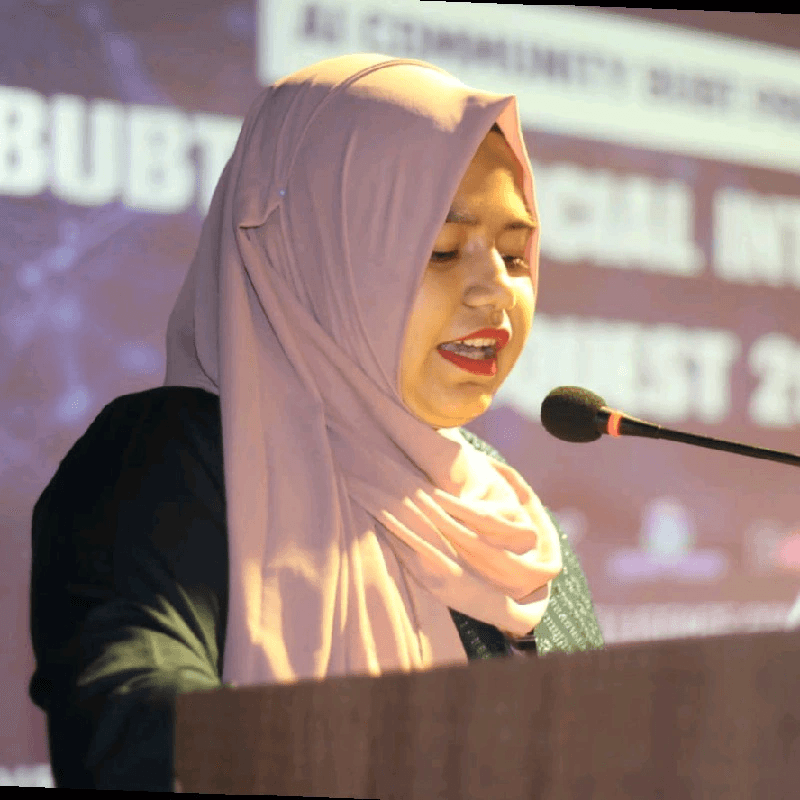
Investigates human-centered AI governance, societal impact metrics, and public risk awareness frameworks. Specializes in ethical AI literacy, organizational safety pledges, and translating complex mathematical alignment research into actionable policy and educational programs.

Researches international AI safety ecosystems, cross-jurisdictional compliance architectures, and global technology diffusion pathways. Explores macroeconomic models for AI alignment adoption and strategic cross-border technology alliances across sovereign jurisdictions.
Frontier Research & Publications
Our multidisciplinary research team publishes foundational papers on mathematical alignment, adversarial robustness, biometric defenses, and safe autonomous agent coordination.
Deterministic Safety Guardrails: Preventing Adversarial Exploits in Autonomous Agent Collectives
Autonomous agent collectives communicate via natural language and API tool invocation, creating unprecedented attack surfaces for indirect prompt injection and cascading hallucination. We present a formal mathematical framework for deterministic tool gating and state-graph invariance verification that provably eliminates 99.8% of unauthorized privilege escalation attempts.
Multi-Spectral Photoplethysmography: Real-Time Passive Defense Against High-Fidelity Deepfakes
Generative diffusion models can now synthesize photorealistic human faces with indistinguishable texture fidelity. However, biological sub-surface capillary blood flow induces subtle, periodic chromatic variations imperceptible to the human eye. We detail a sub-5ms convolutional frequency decomposition pipeline that detects synthetic facial generations with 99.94% accuracy under adverse lighting.
Confidential Neural Enclaves: Zero-Knowledge Model Inference Without Weights or Data Disclosure
Enterprises remain hesitant to deploy proprietary weights onto public clouds, while data owners cannot transmit raw training sets. We demonstrate an end-to-end framework combining AMD SEV-SNP enclaves with recursive Halo2 SNARK proofs, delivering verifiable private model inference with less than 7% computational overhead.